Posts

Retracing forced laborers’ journey, Koreans finally bring their loved ones home from Hokkaido

Image
First published by The Japan Times (Community/2015/11/18) On Sept. 18, the remains of 115 Koreans forced to labor in Hokkaido in the 1930s and ’40s were finally returned to South Korea, 70 years after the end of World War II. The news went largely unreported in Japan, which was preoccupied with the progress of new security laws loosening postwar restrictions on the country’s armed forces. The legislation was enacted just hours after a boat carrying the remains docked at Busan. The repatriation was the culmination of years of work by civic groups in both South Korea and Japan united under the umbrella of the Committee for the Commemoration and Return of Forced Laborers in Hokkaido, which planned the 10-day trip tracing the 3,500-km route the laborers were forced to take generations ago. It was the largest-scale repatriation operation yet involving wartime remains from Hokkaido. The first step toward the repatriation came in December 2004, at a bilateral summit between Roh Moo-h...

Japan's indigenous Ainu sue to bring their ancestors' bones back home

Image
First published by The Japan Times (National news/2018/07/25) Nearly 150 years ago, Ezo, home of the indigenous Ainu people, was rechristened Hokkaido, formalizing the centuries-long process of the island’s assimilation into Japan. To mark this occasion, a number of companies, groups and municipalities have banded together to launch the Hokkaido 150th Anniversary Project. Hokkaido Prefecture has earmarked ¥ 268 million for the project in its budget for fiscal 2018. Coming 10 years after the government acknowledged the Ainu as northern Japan’s “indigenous people,” this should be a time to reflect on the consequences of the colonization of Ainu land and the near-decimation of the Ainu people and culture. But while raising awareness of Ainu culture is one of the stated goals of the 150th Anniversary Project, the Japanese word for “indigenous people” appears nowhere in the project’s publicity materials. On the Ainu front, the government is pouring much of its effort into promoting ...

Lawyers attempt to fill in the gaps in the GSDF’s heavily redacted South Sudan PKO logs

Image
First published by The Japan Times (News/2017/08/06) Legal team poring over logs that led to Inada's exit suspect redactions point to illegal activities On July 28, then-Defense Minister Tomomi Inada announced her intent to resign, caving in after months of pressure over the apparent cover-up of logs detailing the worsening situation faced by Japanese peacekeepers in South Sudan last year. But what is in those logs that might have made a top minister feel it was worth risking her career to keep them secret? A court case now taking place in Hokkaido may offer some answers. The Ground Self-Defense Force’s contentious five-year contribution to the U.N. peacekeeping mission in South Sudan ended on May 27. The government denies that deteriorating security conditions in South Sudan were the reason for the withdrawal, and had no doubt hoped to draw a line under criticism of the mission with the return of the last 40 service members to Japan. But one woman is determined to keep the...

Sexual harassment at bōnenkai, inept handling, a suicide

Image
First published by The Japan Times (Community/2015/12/09) Case shows how far Japan still has to go to safeguard women's rights in the workplace Bōnenkai season is upon us. For many workers, the end-of-year party season is a welcome chance to let their hair down and celebrate or commiserate over the highs and lows of the past 12 months. But for some women, it can be a troubling time, as the risk of sexual harassment increases, fueled by alcohol, the loosening of inhibitions and the presence of large numbers of inebriated men. At last year’s bōnenkai for the General Affairs Department of the Hokkaido Shimbun’s Hakodate branch on Dec. 8, a 40-year-old nurse who worked part-time at the paper was reportedly sexually harassed by a vice-chief of the department and his subordinate. Two months later, in the early morning of Feb. 21, the woman died of carbon monoxide poisoning caused by a fire at her home. A day before her death, she sent documents criticizing the paper’s inse...

Ainu restaurant offers a delicious cultural excursion

Image
First published by The Japan Times (Food & Drink/2014/07/08) Spring usually comes in early May in Hokkaido, and it is high season to pick sansai, or edible wild mountain plants. Among them, the Alpine leek — kitopiro in Japanese and pukusa in the native Ainu language — is the most attractive. With its intense garlic-like flavor, the plant is an important ingredient in Ainu cuisine. Traditionally, women gathered the wild plants while the men were out fishing and hunting. Ainu cuisine? Even for Japanese people, it is hard to imagine the food of the north’s indigenous people, repressed by Japanese rule for over a century until relatively recently. The majority of the remaining Ainu population is to be found in Hokkaido, but its recipes can be found in Tokyo’s Okubo district, served at HaruKor — probably the only restaurant in Tokyo that specializes in Ainu cuisine. In the Ainu language, the word haru means “food,” while kor means “to have,” and so the restaurant’s name expre...

Stance on 'comfort women' undermines fight to end wartime sexual violence

Image
First published by The Japan Times (Community/2015/03/04) Today, no one would deny that the following case is a war crime and that these acts represent some of the most serious violations of international humanitarian and human-rights laws. Capt. X, an officer with an invading army, came across two young sisters on the battlefield. He sexually assaulted the older girl before taking the small amounts of cash the pair had on them, and their clothes and underwear. He confined these two young women to his company’s living quarters for seven weeks, and organized or tolerated the abuse and rape of the sisters by his subordinates. After seven weeks of this ordeal, the sisters were shot dead. This account can be found in official documents preserved in the National Archives in Tokyo. The captain was a Japanese soldier, 28 years old, while the two victims were French sisters, the youngest aged 14. It happened in March 1945 during the Japanese invasion of Indochina, France’s colony i...

Targeting ethnic high schools

Image
First published by The Japan Times (Opinion/2013/04/11) On March 31 about 6,000 people attended a meeting in Tokyo to demand that Korean high schools remain eligible for free tuition. In February, the Abe Cabinet revised the law to exclude ethnic Korean schools, chosen gakko, from the free-tuition provision for students, enacted in April 2010. Certain municipalities have already begun to cut off subsides for ethnic Korean schools. The nuclear issue with North Korea and the past abductions of Japanese citizens are cited as the pretext. All children are guaranteed the right to learn. Japan has ratified the U.N. Convention on the Rights of the Child, and the U.N. Committee on the Elimination of Racial Discrimination has expressed concern about the exclusion. Children at chosen gakko always become the targets of punishment despite the irrelevance of diplomatic disputes. According to Chong Yong Hwan, a lecturer at Meiji Gakuin University: “Japan regards chosen gakko as a secret...

'Freedom of Expression' exhibit of Japan art festival canceled after threats

Image
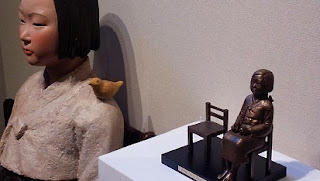
A section of Aichi Prefecture art festival, titled 'After "Freedom of Expression?", shut down three days after its Aug. 3 opening to the public. The exhibition featured works of art refused to display at public galleries,  dealing with the themes such as 'comfort women', the emperor, Article 9 of Japanese constitution or criticism of the government.  A major factor in the decision to cancel it is that the statue symbolizing 'comfort women', a replica of the Statue of Peace in front of the Japanese embassy in Seoul, was severely criticized. The organizers received a considerable number of threatening emails, phone calls and faxes, including one which hint darkly the arson attack, Aichi Governor Hideaki Omura said. The Statue of Peace sculpted by South Korean couple, Kim Soe-gyeong and Kim Un-sung, who involved in the democratization movements in the 1980s as students of art at Chung-ang University in South Korea. Since then, they have created art wo...

As if nothing happened

On Friday, March 1, 2013, two U.S. Navy sailors convicted of raping and injuring a woman in Okinawa in October 2012 were sentenced to nine and 10 years in prison. The crimes resulted in strong protests, especially in Okinawa, against the frequent crimes and sexual assaults involving members of the U.S military forces in Japan. Even though the Americans in this case expressed remorse, it will certainly not be easy for the victim, a Japanese woman in her 20s, to easily erase that nightmare incident from her memory. Indeed, as numerous so-called wartime "comfort women” (Imperial military sex slaves) and rape victims of members of the U.S.  forces have testified painfully, the awful experiences they underwent dominated the rest of their lives. Here in Japan, unfavorable or shameful aspects of the nation's history are routinely passed over as if nothing happened. Incredibly, even the Great Est Japan Earthquake and tsunami of March 11, 2011, and the subsequent, ongoing catastr...

New Ainu law neglects the issue of the ancestral remains of indigenous people

This year, the new Ainu law was enacted to replace the 1997 Ainu Culture Promotion and Dissemination of Information Concerning Ainu Traditions Act. While Japan legally recognized the Ainu as the indigenous people of Japan for a first time, it has never consider for the rights of the Ainu people as international criteria on indigenous people. In common with the previous law, the new law focuses on mainly traditional and cultural aspect by promoting Ainu industry and tourism, but neglecting to protect the Ainu’s right to self-determination, the collective right to live in freedom, to the lands and resources. The law has also not regulated the repatriation of the Ainu ancestral remains the Ainu human remains sometimes by committing the ‘grave-robbing’ to aide for the studies. The issue of the remains’ repatriation has been a major importance for the Ainu people for very long time. continue on the website. Japan's indigenous Ainu sue to bring their ancestors' bones back ...

Hiroshima marks 74 years since the atomic bombings

Image
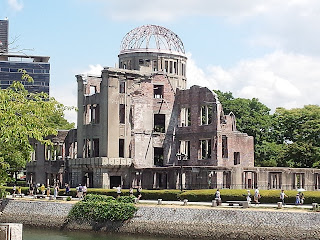
74 years ago today, 8:15 am, the atomic bomb that was dropped over Hiroshima from an American B-29 bomber. The hibakusha, survivors  exposed to radiation, and the descendants of the victims have been suffering from various diseases caused by nuclear weapon. The Japanese government has taken a stance of not joining a U.N. treaty banning nuclear weapons. On August 9,1945, at 11:02am. the second atomic bomb destroyed the city of Nagasaki.

The 'incongruent' image of Morocco

Image
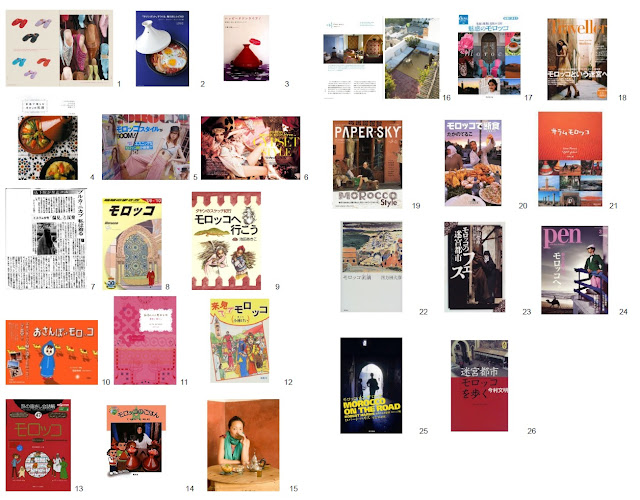
Fascination or indifference ? Stereotyped presentation with an air of exoticism denies much of the country’s reality A "Morocco boom’’ looks set to break out in Japan this year – especially appealing to younger women through Moroccan tastes in fashion and beauty care. Babouches (Moroccan slippers), tunics, marché bags, Tajin pots, mint tea glass, lamps shade, rose water, ghassoul, henna... all these things, both fashion items and decorative goods, are nowadays being regarded with growing interest. Features about Morocco have already appeared in about 10 women’s fashion magazines over the last six months, and I know of at least two or three magazines that will feature Morocco in June. This new phenomenon will touch and affect a vast swath of the Japanese population, and though it has been suggested that Morocco should grasp the chance to promote its business and tourism, it is important to be aware that beyond this optimistic outlook there may be potential downsides lurk...